Address:Yandian Industrial Park, Linqing City, Shandong Province Phone:0635-2854783 Email:hebozc@163.com

Important Information

Precautions for use

  • 1. Keep it clean

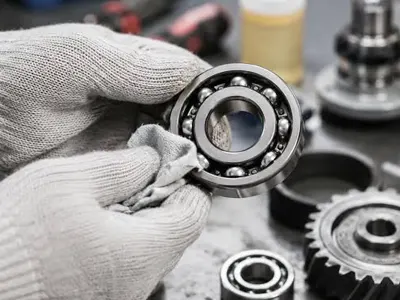
    Before installation, the bearings should be kept clean to prevent dust and impurities from entering the interior of the bearings, which can affect their operational accuracy and service life. Open type bearings should pay special attention to the cleanliness of the installation environment, and it is recommended to operate in a dust-free workshop or clean area.


    Bearing cleaning and maintenance
  • 2. Avoid impact loads

    The contact area between the rolling elements and the groove of deep groove ball bearings is small, and their ability to withstand impact loads is limited. During installation and use, severe impacts should be avoided. Handle and install with care to prevent bearings from falling or colliding.

    Avoid impact loads
  • 3. Reasonable lubrication

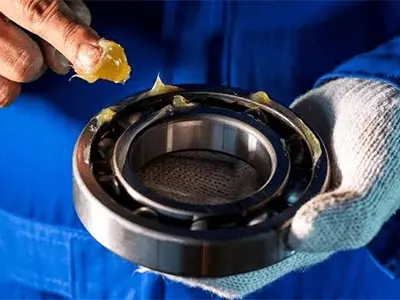
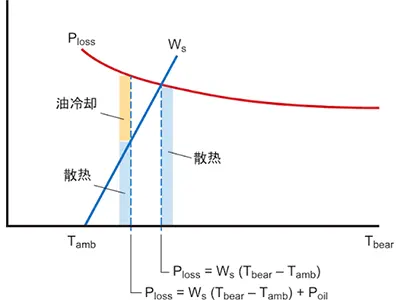
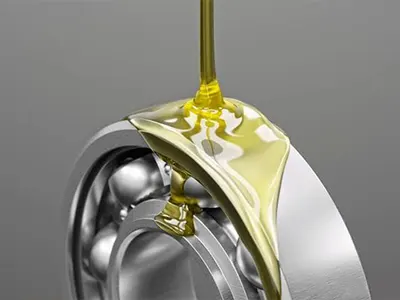
    Choose the appropriate grease or oil according to the operating conditions. Insufficient lubrication can lead to bearing overheating and increased wear, while excessive lubrication may cause excessive temperature rise. It is recommended to add according to the bearing model and usage conditions, following the recommended amount of lubricating grease by the manufacturer.

    Bearing lubrication
  • 4. Control installation temperature

    When using heating installation, the heating temperature should not exceed 120 ℃ to prevent changes in the bearing steel structure, which may affect hardness and dimensional stability. It is recommended to use an induction heater or oil bath heating to evenly increase the temperature.

  • 5. Regular inspections

    During use, the operation status of the bearings should be regularly checked, including noise, vibration, and temperature rise. If any abnormalities are found, the machine should be stopped and checked in a timely manner to avoid further damage to the bearings, which may cause greater losses to the equipment.

Install

  • 1. Preparation before installation

    Check the dimensional accuracy, surface roughness, and concentricity of the shaft and bearing seat to ensure that the installation surface is clean and free of burrs. Clean the anti rust oil of the bearing, dry it and apply an appropriate amount of lubricating grease to prepare for installation.

    Pre-installation preparation
  • 2. Press fit is legal

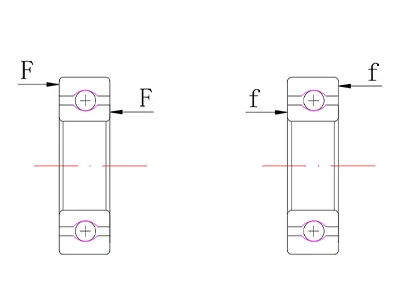
    Suitable for small and medium-sized bearings, use a press to evenly press the bearing into the journal or bearing seat, and it is strictly prohibited to directly strike the bearing ring. Pressure should be applied to the interference fit collar to avoid damage to the rolling elements due to installation forces.

  • 3. Hot packing method

    Suitable for fitting with large interference fit, place the bearing in an oil bath or induction heater and heat it evenly to 80 ℃~100 ℃, then fit it onto the shaft while it is still hot. The heating temperature should not exceed 120 ℃ to prevent changes in the structure of the bearing steel.

  • 4. Check after installation

    After installation, check whether the bearing rotates flexibly and whether there is any jamming phenomenon. When installing the sealing ring or dust cover, be careful not to damage the sealing lip to ensure good sealing effect.

  • 5. Clearance adjustment

    After installation, check the radial clearance of the bearing to ensure that it meets the design requirements (usually C3 or C0 group clearance). If the clearance is too small, it will cause excessive temperature rise during operation, and if it is too large, it will affect the operating accuracy and service life.

    Gap adjustment

Operation Check

  • 1. Operation sound inspection

    At the beginning of bearing operation, use a listening stick or electronic stethoscope to check the sound of bearing operation. The normal operation sound of deep groove ball bearings is a uniform and smooth buzzing sound. If there is a sharp "hissing" sound, it may indicate insufficient lubrication; If there is an irregular impact sound of "clucking" or "clicking", it may indicate that the rolling elements or channels have been damaged.

    Sound inspection
  • 2. Temperature rise inspection

    The temperature of the bearing will gradually rise and stabilize within 1-2 hours during the initial operation. The bearing temperature should be closely monitored, with a normal temperature rise generally not exceeding 40 ℃ and a maximum temperature not exceeding 80 ℃~90 ℃ (depending on the temperature resistance range of the lubricating grease). If the temperature rises abnormally, the machine should be stopped immediately to check the cause

    Temperature rise inspection
  • 3. Vibration inspection

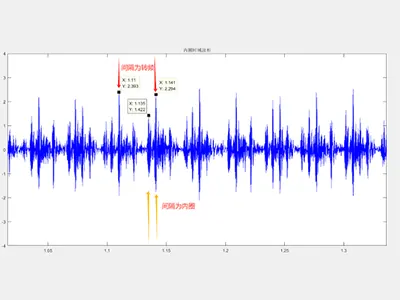
    Use vibration measuring instruments to detect the vibration value of bearings. Abnormal increase in vibration may indicate internal damage to the bearings, such as rolling element peeling, channel wear, or cage deformation. It is necessary to stop the machine for maintenance in a timely manner.

    Vibration Check

Disassemble

  • 1. Disassembly principle

    When disassembling bearings, special tools should be used to avoid directly tapping the bearing rings. The disassembly force should be applied to the interference fit ring to prevent damage to the bearing or installation site, ensuring a safe and reliable disassembly process.

    Dismantling principle
  • 2. Puller disassembly method

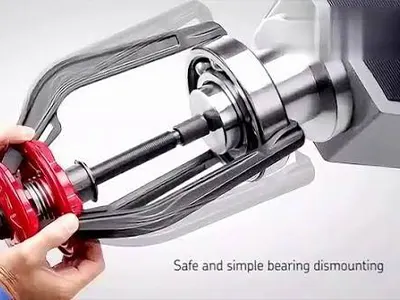
    Suitable for disassembling and installing bearings on shafts, use a bearing puller to clamp the inner ring of the bearing, and evenly pull it out with force. Note that the claw hook of the puller should be firmly clamped to prevent slippage and damage to the shaft neck.

  • 3. Heating disassembly method

    For bearings with large interference fit, induction heaters can be used to heat the inner ring of the bearing to expand it, making it easier to disassemble. When heating, the temperature should be controlled to avoid changes in the structure of the bearing steel, which may affect the secondary use of the bearing.

  • 4. Inspection after disassembly

    After disassembling the bearing, it should be cleaned thoroughly and checked for obvious damage to the rolling elements, inner and outer ring channels, and cage. It should be determined whether the bearing can be repaired or needs to be scrapped and replaced, providing a basis for subsequent maintenance.

Maintenance of bearings

  • 1. Cleaning and inspection

    Clean the removed bearings with kerosene or specialized cleaning agents to remove oil stains and impurities. After cleaning, inspect the rolling elements, inner and outer raceway, and cage for defects such as cracks, peeling, wear, or pitting.

    Cleaning and inspection
  • 2. Dimensional accuracy testing

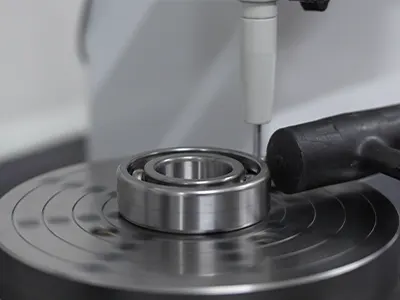
    Measure the inner diameter, outer diameter, and width dimensions of the bearing with a micrometer or inside micrometer, and check if they are within the allowable tolerance range. Simultaneously check whether the radial clearance and axial clearance of the bearing meet the usage requirements.

  • 3. Rotation accuracy check

    Install the bearing on the inspection shaft, rotate the outer or inner ring, use a dial gauge to detect radial and end face runout, determine whether the rotational accuracy of the bearing has decreased, and ensure that the bearing meets the requirements for use.

  • 4. Conclusion judgment of maintenance

    Based on the test results, determine whether the bearing can continue to be used, whether it needs to be repaired, or whether it should be directly scrapped and replaced. For repairable bearings, they can be re ground or replaced with rolling elements before continuing to be used.

Maintenance and repair

  • 1. Regular lubrication and maintenance

    Regularly replenish or replace lubricating grease according to the operating conditions of the bearings. It is generally recommended to replenish lubricating grease every 3-6 months and replace it at least once a year. When replacing, it is necessary to remove the old lubricating grease, clean the bearings, and then refill with new grease.

    Regular lubrication
  • 2. Running status monitoring

    Establish a bearing operation status file, regularly record bearing temperature, vibration, and noise data, and compare historical data to detect abnormal bearing conditions in advance, avoiding sudden failures that may cause downtime losses.

  • 3. Seal inspection

    Regularly check the integrity of the sealing ring or dust cover. If the sealing element is aging or damaged, it should be replaced in a timely manner to prevent dust and moisture from entering the interior of the bearing and affecting its service life and operating accuracy.

    Seal inspection
  • 4. Long term shutdown maintenance

    Bearings should be coated with anti rust oil and wrapped in anti rust paper before long-term use, and stored in a dry environment. Before reusing, the bearing condition should be checked, cleaned again, and lubricated before it can be put into use.

Copyright © 2025.Linqing Hengbo Bearing Co., Ltd All rights reserved.