

In summary, there are three main causes of bearing scorch in deep-groove ball bearings: inadequate lubrication; excessive loads on imported bearings; and poor precision of the shaft and bearing housing. These are all factors that can lead to bearing scorch. The following provides a detailed explanation of the causes of bearing scorch.
One cause of bearing scorch is inadequate lubrication; this may be due to the use of unsuitable lubricants, or to applying too much or too little lubricant, both of which are incorrect.
The second cause of bearing scorch is excessive load on the bearing; excessive rotational speed; insufficient bearing clearance; or the ingress of water or other foreign matter.
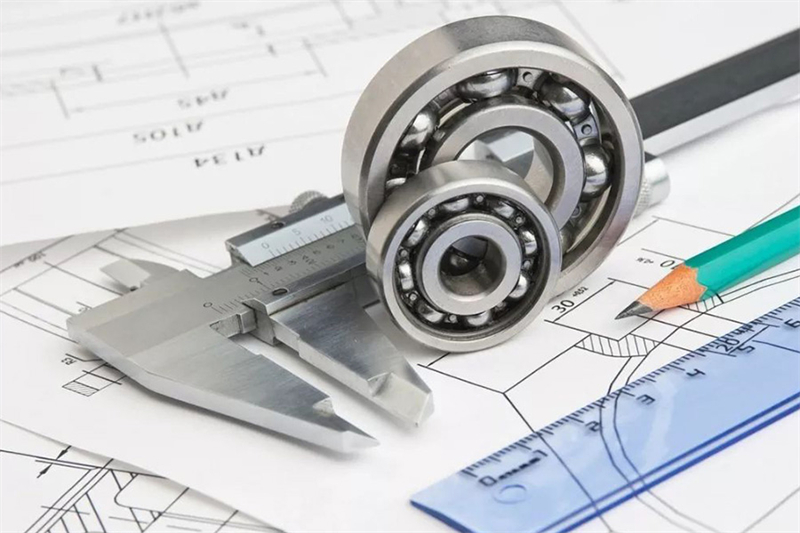
The third cause of bearing scorch is poor precision of the shaft and bearing housing, resulting in excessive shaft deflection.
These three main causes of bearing scorch lead to a condition where the raceways, rolling elements and cages of imported bearings heat up rapidly during rotation, causing them to discolour, soften, melt and break.
It is recommended that, when using bearings, care be taken to ensure that all aspects—including installation, lubrication and clearance—are carried out as precisely and thoroughly as possible. This will help to minimise the risk of bearing scorch and extend the service life of the bearings.
The causes of bearing noise are relatively complex; one factor is wear on the mating surfaces of the inner and outer rings. This wear disrupts the fit between the bearing and the housing, as well as between the rolling bearing and the shaft, causing the shaft axis to deviate from its correct position and resulting in abnormal noise when the shaft is moving at high speed. When a bearing becomes fatigued, the metal on its surface flakes off, which can also increase the radial clearance and produce abnormal noise. Furthermore, insufficient lubrication leading to dry friction, as well as bearing fracture, can all generate abnormal noises.
Once a bearing has worn and become loose, the cage may become loose or damaged, which can also produce abnormal noises.
(1) If the bearing is damaged, it should be replaced immediately.
(2) The bearing grease may be insufficient, excessive, or contaminated with impurities such as iron filings. The grease capacity should not exceed 70 per cent of the total volume; if impurities are present, the grease should be replaced.
(3) The fit between the shaft and the deep-groove ball bearing is too tight or too loose. If too tight, the shaft should be re-ground; if too loose, a sleeve should be fitted to the rotating shaft. (4) The fit between the bearing and the end cover is too tight or too loose. If too tight, machine the bearing housing; if too loose, fit a steel sleeve inside the end cover.
(5) The motor’s end covers or bearing covers are incorrectly fitted. Ensure the flanges of the end covers or bearing covers are properly seated and aligned, then tighten the screws.
(6) The belt is too tight or the coupling is incorrectly fitted. Adjust the belt tension and align the coupling.
(7) There is insufficient bearing lubricant, the lubricant contains impurities, or the oil ring is jammed. Top up the lubricant, replace it with fresh lubricant, and repair or replace the oil ring.

Linqing Hengbo Bearing Co., Ltd. is located in Linqing, Shandong, a bearing industry base. It is a modern bearing manufacturing enterprise that integrates research and development, manufacturing, sales, and comprehensive management, specializing in the production of medium and large-sized Class 0 deep groove ball bearings.
Copyright © 2025.Linqing Hengbo Bearing Co., Ltd All rights reserved.